Thursday, December 31, 2020

Ten Years Since My Stroke


Me and my sister, Cherie.  2010. 
Showing off my lopsided grin. 
This is when my left side still didn't work well.


 2020 marks 10 years! 10 years ago I had my stroke. I have learned so much during this journey. I have come a long way.  My biggest lesson has been that I can keep improving. I can keep getting stronger and find a little bit more of the old me. Never think that a stroke has defined your abilities.

My biggest improvement is with my physical stamina and my left leg and arm strength. This year I started going on walks which led to hiking again for the first time post stroke. It hasn't been super far and the ground has to be fairly smooth, but I am hiking! I walk about 3-5 miles each time. My daughter, Tiffany, says that she thinks I am the fittest she has ever seen me.  What a wonderful compliment! 

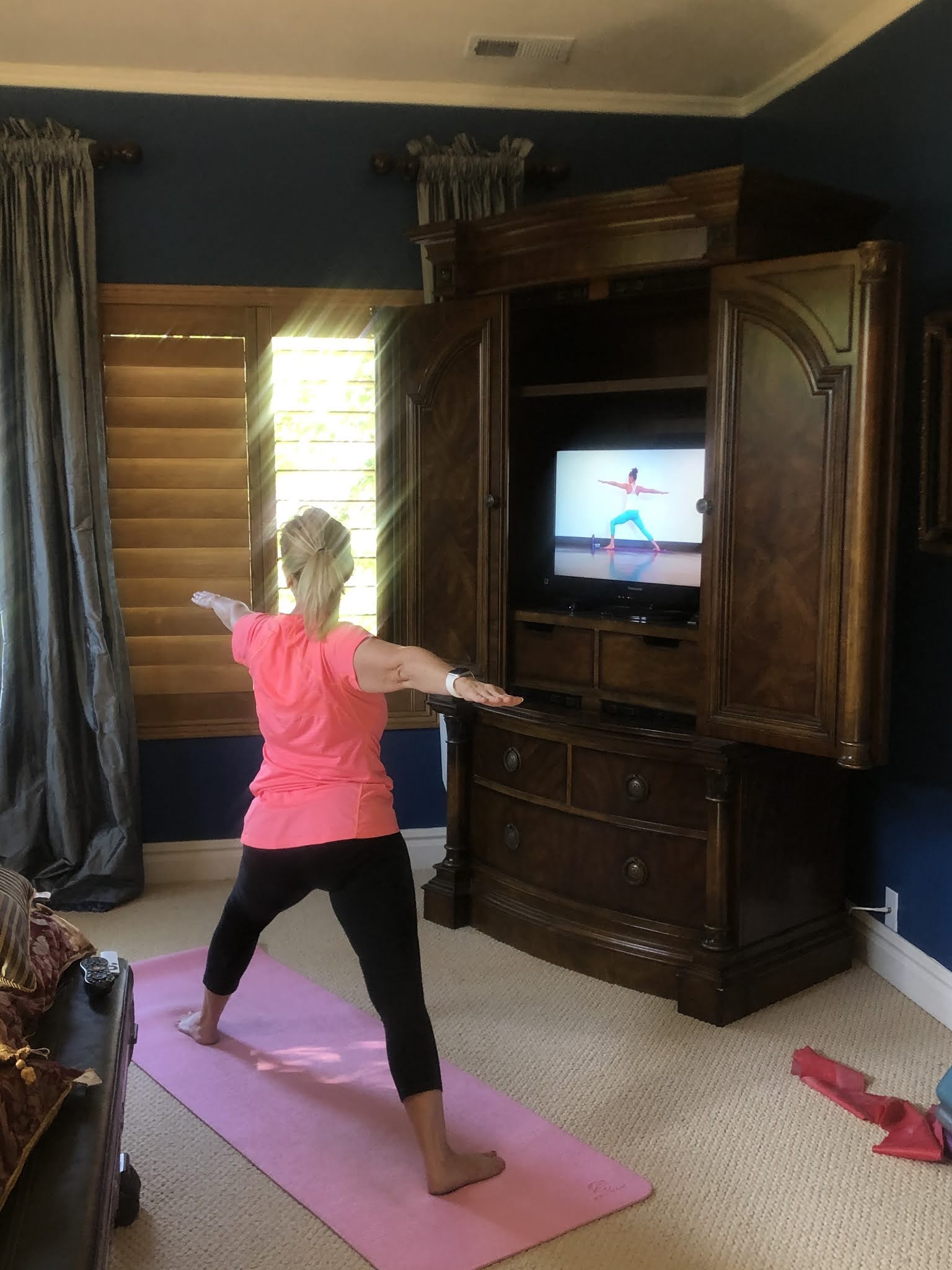
I am also getting stronger with my balance. I have focused on yoga to help with this.

More improvements include: I am driving a little farther on my own. I'm getting a little braver. I can wear a little a bit of jewelry now. I've learned more coping techniques to deal with my sensory overloading. 

My daughter-in-law, Brianna, has told me that she can no longer tell that I had a stroke and she definitely could when she first met me 6 years ago. I no longer explain to people that I have had a stroke. My stroke does not define me.

I still have things to work on. Some things may never improve, like my arm. My focus is on what I can improve. I tell people: I am the turtle, not the hare. And like the turtle, I keep moving forward.

2020 has been a hard year in a lot of ways, but I am grateful for the quiet time, the personal time I have had to focus a little more on my healing.


My mother-in-law, Nancy, and me with our 2010 injuries:
She had a partial leg amputation. 
I had a stroke and starting wearing a glove and jacket to keep my arm warm. 
The warmth takes the edge off the pain.

2020: Me learning yoga.


2020: Me on a walk in Southern Utah.
Yep, still wearing the glove. It's become part of my fashion.
And I started wearing a watch this year. 
On the right arm, but I'm wearing a watch!

Monday, May 19, 2014

Chapter 18: A Child's Insight

I love kids.  I love their perspective on things.  And they can always make me smile.  Things are not quite so hard after you’ve talked to a child.
This last Sunday while walking in the church hallway, a little girl asked me,  “Why are you wearing a glove?”
“My hand has a problem.  It doesn’t work right.  And the glove helps it feel better,” I replied.
She looked at me, and you could see her thinking about this.  Then she gave me a big smile.  And said, “Like Elsa!”
I couldn’t help but smile back at her clever idea.  “Yes, like Elsa.”
Thanks, my unknown little friend.  Thanks “Frozen.”  Thanks Disney.  
I now have a new and much funner reason to be wearing a glove.

Sunday, February 23, 2014

Chapter 17: Challenges, Part 2


Earlier, I mentioned that there are two main challenges I face from my stroke.  I talked about the emotional anxiety and just dealing with sensory overload all too often.  After months of putting it off, I am ready to share my other elephant.
A couple weeks after I had my stroke, I started noticing pain in my left arm.  It goes from my fingertips to my shoulder.  The best way I can describe the pain is an intense stinging feeling and it penetrates and becomes a deep ache all the way to the bone. 
I would compare the stinging to what you feel when your fingers start to warm up after being outside in the winter.  In fact, my arm and hand feel cold to me all the time! But, if you touch my arm, it really isn’t cold to the touch. 
At first, I thought it was my arm “waking up” from the stroke.  It was the part of my body hardest hit.  I couldn’t lift my arm.  I couldn’t use my hands.  It just hung there.  So when I started feeling something, I was excited.
I mentioned my pain to my Occupational Therapists.  They didn’t have any answers.  It wasn’t because my arm was waking up.  They did try several heat treatments with warm paraffin or a mud clay wrap.  These eased the intensity of the pain, but weren’t cures.
As the months of therapy went on and I regained a lot of the use of my arm and hand, the pain didn’t ease at all.  I mentioned my pain to my neurologist.  He wasn’t sure what it was, but started prescribing different medications to try to help with the pain.  We would try one thing…no good.  Then try another.  Some, like pills for nerve damage, just made the pain more intense!  I think it was because my nerves are fine, it’s my brain that’s messed up.
I was frustrated by the lack of help from my doctor. I was in so much pain and just wanted someone to give me some answers.  So Larry started searching online for some answers.  He typed in my symptoms and linked them to strokes and then to hemorrhagic strokes and finally found a diagnosis!
He had me read the article on Chronic Post-stroke Pain (CPSP) or Thalamic Syndrome.  As I read, I soon discovered what an elite group I'm in!  Hemorrhagic strokes account for 13% of all strokes.  So, not too many people get bleeding strokes.  Only 8-10% of stroke victims suffer from CPSP.  I’m in a small group within an even smaller group of people. (No wonder my doctor didn’t know what was wrong.)  I read that you are more likely to get CPSP if your stroke was on the right side.  Yes, that’s me!  CPSP occurs if you damaged your thalamus, the sensory area of your brain.  Yep, another check!
Then, I read the symptoms: burning, aching, and prickling.  Constant pain.  Aggravated by temperature changes.  Feels more pain when emotionally stressed or cold.  This was also true for me.
I had found my diagnosis!  Sadly, as I went on to read that there isn’t a cure for this.  No medication really helps because the problem is with my brain.  It has a big hole in it and it is misinterpreting messages.  My brain thinks there is something wrong with my arm when in reality, physically my arm is fine.  I guess you could compare it to amputees who can still feel the “ghost” arm.  And with CPSP, my brain could send even more messed up messages down the road and make the pain feel get worse! 
As I am trying to find the blessings in this challenge, here is one… thankfully my pain seems to be staying the same and not getting worse.  And I’m thankful to know what it is.  It’s amazing how comforting it is just to have an answer to what I am facing.
My challenge with this facet of my stroke is learning coping techniques and coming to terms with knowing it’s probably here to stay.
My biggest help with this is staying warm.  I have learned that warmth takes the edge off the pain.  It is still there, but not as intense.  
I now take baths to soak my arm every day and often more than once a day depending on the pain.  So I'm very clean. ;-)
I have started my own little fashion trend. (Okay, Michael Jackson started it, and I am continuing it.) I wear a glove on my left hand all day!  Yes, even in the summer. 
After much experimenting, I discovered that the best gloves for me are cashmere.  For one, they are very warm.  Two, I can find them in longer lengths and it’s my whole arm that needs help, not just my hand. And then, I also had to address the sensory part of my stroke.  Other gloves felt too tight, I was aware of them and so they drove me nuts!  I am slowly getting quite a collection of gloves in all colors.  Who knew they would become my new accessory? 
Some of my new fashion accessories.
I bought two electric blankets.  One is a throw to wrap around my arm while I am watching TV or trying to work on the computer downstairs. The other is for my bed to help me sleep at night.  I’m most aware of the pain at night; I think because there are no distractions.  So I often lay in bed with my blanket wrapped around my arm waiting for the sleepiness to overcome the pain awareness.  It’s quite the battle sometimes.
I don’t know why this challenge in my stroke is so hard to write about.  It has nothing to do with emotions and anxiety, really.  But, I guess because it makes me cry.  It never shuts off and wears me down; some days I just can’t deal with it.  It’s hard facing something that you know won’t go away.  
So that is another coping technique: 
Don’t look at how long you have to deal with it, just deal with it one day at a time.
Our photographer caught a picture of me in my glove as Larry carried me to our next photo site.


Another picture of me and my matching glove.

Sunday, January 6, 2013

Chapter 16: Re-train Your Brain...maybe


Since my stroke, as I learned how to walk again, as I learned how to use my arm again, as I learned how to live in my new life, I was often told we are re-training your brain.  The pathways that knew how to do these activities had been severed.  So we needed to make new pathways. 
For the most part, this training has worked.  But, I guess after 46 years of sending messages through one pathway, my brain sometimes forgets about the new pathways.  This mostly happens when I am tired, either physically or emotionally.
If I ever wake up at night needing to go to the bathroom, my brain is half awake. I find myself staggering like a drunk, trying not to fall because my left leg has forgotten how to walk.  It has taken the wrong pathway.  Since my stroke, I usually wake up to go to the bathroom almost every night.  So you would think that my brain would remember.  But, no, it’s too tired to make the new connections.
Another example is when I get emotionally overwhelmed and cry too much.  When we went to the comedy concert, as I mentioned I got way overwhelmed.  So, when the concert was over and it was time to leave, my body did not want to cooperate!  My leg dragged, my face sagged, my arm hung limply by my side.  I just wanted to get out of there and my brain had short-circuited.
One experience took me completely by surprise.  Larry and I had gone to a movie.  There was one short scene that scared me and I jumped in my seat with a little squeal.  Luckily, it was short and I recovered quickly.  So I was very surprised that at the end of the movie when I went to stand…I couldn’t!  My leg totally gave out on me.  I had to lean on Larry as I limped out to the car.  Weird.
Thankfully, these episodes are short.  My brain just needs to rest recharge and remember that, yes it has been re-trained.

Wednesday, November 21, 2012

Chapter 15: Bizarre Experience


I mentioned earlier that since the stroke, I get overwhelmed easily.  Sensory overload. But, I also continue to try to not give up on things I enjoy.  Keep on trying, right?               
This lead to an experience I won’t try again for a while.
Larry and Devin got tickets to go to see Brian Regan’s comedy concert.  Devin invited his girlfriend, Lisa, and Larry wanted me to go.  I really wanted to go, too.  I enjoy Brian Regan, who doesn’t?  He’s hilarious and no potty mouth.  And I wanted to spend time with my family.
I decided that I wanted to give it a try.  It wasn’t music.  It wasn’t spiritual.  It wasn’t going to be deeply touching.  I kept telling myself that humor would be different.
Right off, it was overwhelming…big concert hall, lots of people.  But, I had considered this.  I waited in the hallway, away from the crowds, until the performance began.  When the lights dimmed and the warm-up act was introduced, I slipped in.
The opening comedian was good and I chuckled and smiled.  I started to relax.  Then Brian came on.  He was hysterical!  Everyone laughed and laughed, including me.
But here is where the bizarre came in…I was laughing and sobbing AT THE SAME TIME!  Who knew you could do that? The more I laughed, the harder I bawled.  I soon was very grateful that everyone was laughing so much, so they couldn’t hear me.
There was one girl sitting on the other side of Larry who noticed what was happening.  I think she watched me almost as much as she watched Brian.  Two entertainers at one time!
I didn’t leave.  I didn’t want the family to not enjoy their experience.  And finally I got to the point that I was so exhausted, that my body just shut down.  I felt a little catatonic.  It was time for my body to sleep and re-boot.
So, now I know, loud laughter is not my friend. Humor and strokes make for an odd mix.

Sunday, November 11, 2012

Chapter 14: Sleep and Then Sleep Some More


After having my stroke, I was told the best healer for a stroke was sleep.  They told me to sleep often.  This in my opinion felt more like giving approval to sleep tons because I sure wasn’t struggling to get to sleep. 

Those first few weeks, make that months, after my stroke I was asleep more than I was awake.  Slowly it tapered off to a long afternoon nap and a very long night’s sleep.

I thought by now I would not need a nap, but no.  I am still napping, still sleeping the night away.  

I don’t know if this means my brain is still healing…I hope!   
But if I don’t get my sleep, I am in more pain.  I get overwhelmed easier.  I cry more. I'm no fun to be around.  I don't even want to be around me.

So I guess I just keep sleeping.  Just call me Sleeping Beauty. :-)

Monday, May 21, 2012

Chapter 13: The Stroke Diet


I may not be as active since my stroke, but with my new stroke diet I am staying slim.

My sense of smell and taste has been tweaked.  It is now slightly off.  

I can no longer trust my sense of smell.  I sometimes think something smells sour or spoiled.  At first, I used to throw those things away.  But one time I had something that I thought smelled burnt and Larry walks up to me as I’m taking it out of the oven and tells me that it smells delicious.  Delicious?  Really?

That got me to thinking that maybe it’s me, not the food.  So I often let my family decide if something is spoiled.  But, if it smells bad to me, I’m not going to eat it.

My taste has changed too!  So many foods no longer taste good to me.  My body is definitely better off for it; most of the foods that I don’t like anymore are not really good for me anyway.  I miss having those yummies.  But, why eat fattening food if it tastes gross?

For example, I used to love French fries.  The first time I had a French fry after my stroke was supposed to be a treat for me.  I took a bite, with a smile on my face and was shocked to realize it tasted horrible! 

I still remember loving French fries.  They still look delicious, so I’ll have one every now and then hoping... and, yuck!  Nasty!  Sadness!  I miss my French fries.

Another feature of this diet is poor memory.  I struggle to follow the directions I read.  If I get interrupted, that’s it.  Did I put in the salt?  Did I add all the sugar?  I can’t tell.  It’s all white!  I can’t remember what I just did.  Frustrating.  I find myself bursting into tears and give up. 

So are there any cookies in our house?  Brownies?  Very rarely.  

I can still make main dishes.  You just look at your pan and see, “Oh, I forgot the carrots.”  It’s really hard to figure out what is missing when it’s all white stuff.

I do still try from time to time.  I had an assignment to bring a dessert for a family gathering.  So I focused, kept my finger on the recipe, and made them when no one was home.  No distractions.

I took them to the dinner with my fingers crossed.  I tried one and thought, “Darn it, not very good.  I must have done something wrong.”  But Larry tried them and told me they were good.  I guess he was right.  They got all gobbled up!

So there you have it.  My new diet.  All you have to do is have a stroke or some other brain injury, find that food no longer smells or tastes good and that cooking desserts is not that fun.

Monday, April 30, 2012

Chapter 12: Blessings

I think with any challenge or trial in our lives that it is important to look for the good things that are happening.  No time in life is a complete disaster.  Though I admit that there have times that it has been hard for me to find the good.  I've had to look a little harder and pray more often to find the Lord's blessings in my challenges.

But I know He is always there.  I know that there are always blessings and tender mercies extended my way if I just look for them and recognize them.
I have had a few health improvements from my stroke.  Yes, it’s true, I have had some positive in the health area too.

I used to struggle with some sciatica pain on my left side.  After my stroke, my left side has been pretty numb.  So, no more sciatica pain!  After two years, unfortunately the sciatica pain is coming back.  But, that means my left side is awakening again.  So it's all good.

Another wonderful blessing has been the end of my migraines!  I used to get a severe migraine headache once a month.  Yes, it was at that time of month.  I guess in a way I was blessed because I knew exactly when it was coming, so I never planned anything on that day.  But, I am very grateful that I no longer have them.  

I don't know if the migraines were a symptom or warning sign of my stroke.  The doctors never indicated this was the case.  I don't know if the migraines started from the sensory part of my brain or from my left side.  But, whatever the reason, this is a wonderful thing.  I am so grateful that my migraines are gone.

I am grateful for the blessings I continue to receive as I go through this new life.  I am continually looking for the Lord’s hand in my life.  I know He blesses me more than I often recognize.


Sunday, April 22, 2012

Chapter 11: Challenges


Whew, big sigh.  This chapter has been hard for me to put into words.
I would say that I have two main challenges since my stroke.  I have lots of issues that I am learning to deal with, but those are like pesky insects in comparison to my large burdensome elephant challenges.
So, in this chapter, here’s the first:  I cry a lot!  I don’t just cry; I don’t just have tears rolling down my cheeks. I sob. My body shakes and it’s noisy! 
If something is overwhelming, I cry. 
As I mentioned before, the stroke happened in the sensory part of my brain.  So if I have any kind of sensory overload, I cry.  Too many people, too much noise, too much chaos, too much touch, too much emotion, you name it; I can’t handle it. 
(I guess I am grateful that I don’t react with some other emotion like uncontrollable laughter or intense rages.)
Anyway, this means things that many of the things I love most I now struggle doing.
Swimming.  I love to swim.  I’ve begged Larry for a pool for years!  Now, I try getting in the pool and start to cry!  Ridiculous!  Too much water surrounding me, touching me and I don’t know how to cope.
Music.  I used to use music to exercise with, do my chores to, lift my spirits, and touch my soul.  Now music becomes painful.  It still touches me, but it also overwhelms me.  We have season tickets to the Broadway musicals at the Capital Theater in SLC.  After a couple of attempts, I have had to give them up….for now.  I am too distracting for those around me trying to enjoy the show.  And unfortunately I ruin it for Larry too.
Church.  Now that’s a big one.  I need the Spirit of Lord with me to help me deal with my new life.  Even though I cry every week, this is one I will not give up.  With Larry’s (usually appreciated) motivation, every week I go to church—full of anxiety.
Many of the people in my ward must wonder what my problem is. It seems like so much going on, people visiting, organ music playing! I’m on the verge of tears by the time I walk into the chapel and as soon as I feel the spirit—waterworks. And I won’t shut myself off from feeling the spirit; what’s the purpose in going otherwise?
I sometimes cry myself dry by the end of the meeting. I hope the congregation doesn’t think I’m upset at Larry or something! Right now I’m only making it to sacrament meeting. I’m still trying to build up the courage and strength to go to the rest of my Sunday meetings but so far it’s more than I can take. The crying exhausts me! But, I know I’ll get there in time.
I also have anxiety now.  I struggle to do even the smallest things. 
Leaving my house to go to the Post Office and mail Kyle a package is a BIG deal.  I end up sending it weeks after it is ready to mail.
Reaching out to people is a BIG deal.
Coping with spur of the moment issues, which is just a part of everyday life, is now a BIG deal.  “Mom, I need…” And I break down and cry.  My brain can’t deal, can’t process how to respond, so I just cry.
I was a very independent woman before this.  I think part of this challenge is for me to learn to rely on others.  I am also much more sympathetic with anyone who struggles with fears.  I’ve learned lots of things can feel scary.
I am pushing myself to leave my house and if I cry, I cry.  This is who I am now.  Hopefully not for the rest of my life, but I need to deal with it in case it is.  I’ve gotten to the point where I am not really embarrassed by my crying anymore.  But I also don’t want to draw attention away from whatever should be the focus.
Please know that I may not always reach out to you because I’m just trying so hard to keep it together and not cry.  But, I really want to keep my friendships. You are all important to me.
Part of sharing all this is so you understand.  Where is Cathy?  Why isn’t she going to church, to wedding receptions, etc?
What can you do for me or for your friend or family member who had a stroke?  Don’t feel awkward about reaching out.  I really appreciate a “Hi.”  A squeeze on the arm or a pat on the shoulder helps.  Don’t feel you have to do it all the time, just every now and then.  It’s a great emotional boost.
Thanks for listening, for understanding…it makes the journey easier.

Monday, March 5, 2012

Chapter 10: Quirks

I thought I'd start out with a little humor.

Who knew what odd things would happen to you when you have a stroke?  Your body gets so many wrong signals from your brain.  Can you re-train that?  I don't know.  So far, not happening for me.

I joke and tell my brain, "No, this is wrong."  "Hey, up there, reboot!"  Mostly I have accepted, adapted, resigned myself to some odd quirks.

First quirk, I drool.
Drooling is for dogs, not people!  Luckily I am aware that I am creating more saliva.
So, I swallow more when I'm awake.  I only drool at night when I'm asleep.
Little pools of moisture all over your pillow the next day?  Not so attractive.
Lots of pillow case washing.

I found this very helpful at Christmas card time.  Licking envelopes?  Licking stamps?  No problem for me.  Never once got cotton mouth.  Now isn't that something to be proud of?

I finally went to the dentist about a year after my stroke.  For several months, when I was living in my fog, I didn't always remember to brush my teeth.  I know, gross.  Anyway, I didn't have any cavities!
I was very surprised.  My dentist told me saliva helps break down plaque.  So my saliva is good for some things. ;-)

I suspect I am just creating more saliva out of my left salivary gland.  I'm not sure; I haven't tested it.  But I do have supporting evidence...

My left eye often waters.  My left nostril is frequently flowing.  Yes, my left side must think I am all dried up!

So, if you need help with your mail, let me know.

Monday, February 27, 2012

Part 2: My New Reality


Chapter 9:  All Better?
“You’re all better now, right?” 
That question always takes me by surprise.  How should I answer that?  Uh…no?
I suspect people want me to say yes.   I know I look all better.  But, I’m far from all better in many ways.  To me, this is an awkward question.
I am grateful that I look like I’m back to normal.  I am grateful that I don’t slur my words or limp or use a walker.  I have come so far and I am blessed that my stroke didn’t leave me in a wheelchair or unable to communicate as it does with so many. But, strangely, sometimes I wish my injury were a little more visible.
When you are in a cast or have a bandage wrapped around your head, people can see that you have an injury.  It’s obvious.  And you are treated accordingly.  I have a hole in my brain that will always be there.  I can just imagine if the hole were visible… everyone would know that I have a problem.  But, that would be really disgusting.  I am VERY grateful you all can’t see my injury.  
That leaves me with sharing my struggles with those who really want to know and coming to accept the fact that most people will just assume I’m all better.
I mostly get asked, “How are you doing?” 
I have learned how to respond to that.  “Fine.”  “Plugging along.”  “Getting better.  Slowly, but surely.” 
I so appreciate being asked.  To me you are saying, “I still care.  I am aware that you are still struggling.”  But, I know you don’t really want me to bring out my long list of ailments.
This is a bit of a lonely journey.  I got tons of support at the beginning and then life moved on.  We like the idea that when we get hurt, we get better.  We heal. 
With a stroke, or any brain injury you often can’t ever completely heal. This was one of my hardest challenges of the stroke; I had to accept that I might never be the Cathy I was two years ago.  But, I am continually working to improve what I can.  And I am learning coping strategies with the things that look like I may have to deal with the rest of my life.
Part two of this story is for those of you that really do want to know my long list of ailments.  Thanks so much for those who have asked to continue with my story.  Or perhaps you are dealing with a stroke and maybe some of this will resonate with you.  Or maybe this will give a glimpse of how to deal with someone who is dealing with a stroke.  Or maybe you are just curious.  In any case, here we go.

Saturday, April 2, 2011

Chapter 8: Blame It On the Brain

I had a hemorrhagic stroke, or as I refer to it, a brain bleed. A vein in my brain ruptured and started to bleed out in my brain. This causes a lot of damage to the brain. And logically, the more you bleed the more damage that happens. I’m told that mine was a moderate bleed.

Looking at the scan, it looked like the size of the bleed was about the width of a quarter. Sometimes I think that’s not too big, not too bad, it could have been worse. Other times, I think, Wow! That was a big chunk of brain I lost.

I had several scans and MRIs throughout this process watching and hoping for the bleeding to stop growing and start diminishing. I was very blessed with this too; the bleeding stopped increasing after the first day.

Then, the therapy started and we focused on my healing, while we waited for the blood to be absorbed into the brain. The doctors needed a picture without the blood blocking the view to see the full damage and if there were more weak veins to be concerned about.

When I looked the pictures of the first scans, I saw a shiny white spot. This was the blood on the brain. When I finally saw my last picture, I saw a big black spot.

I looked at the doctor and said, “This looks like a big hole.” He told me it was a hole. Larry and I looked at each other, and then Larry asked, “Will this get smaller through time?” Unfortunately, no.

Apparently, when blood touches brain, it kills the brain. They had told me that blood kills brain tissue before, but I guess it hadn’t really registered what that meant. It doesn’t just mean I hurt my brain. I have a HOLE in my brain! Literally.

The brain is an amazing thing. I have really come to appreciate my brain. There is SO much that I can and have retrained. New pathways have made connections and I can teach my body to walk again, to move my arm again. I really am awed at all we can learn and relearn.

There are some things that can’t be relearned.

Some memories are gone. Every now and then Larry or one of the kids will bring up a memory that I have no recollection of, none. Usually with memories, a person can tell you things you did, said, experienced and at least a vague memory will come back. You say something like, “Oh, yeah.” or “That sounds familiar.” I do have those, but I also have complete blanks…nothing. Memories and experiences can’t be retrained; they are just gone like I never did those things.

I also struggle with words. The right word eludes me. I feel like I should know this word, but can’t find it. Or I say the wrong word and don’t even realize it. Here’s a couple of examples.

Tiffany calls me on Skype and I want to see the grandbabies. Sadly, they have already gone to bed. I tell her, “You’ll have to reschedule their birthdays so I can see them next time.” Tiffany pauses and says, “Bedtimes?” “What did I say?” Well, they both started with a b.

Another time, I was visiting with a friend and telling I was looking for to Crocodile time. She looked at me really weirdly. You could tell she was trying to figure out what I talking about. Then, she started to chuckle and said, “Christmas time?” “Yes, what did I say?” I don’t even realize I am saying the wrong words! But, after she explained, I had to laugh with her. Crocodile was ridiculous!

I have friends tell me that they do this too. But, I do it all the time now. I feel stupid! No, I feel like I am less. I have lost knowledge that I used to have. I literally can feel that there are things missing. It wasn’t a gradual loss and change that you have as you get older. I’ve felt that in the past and there is a definite difference. It’s a scary feeling, a sad loss.

I don’t want you to think that all I do now is have a pity party! It would be easy to fall into a major funk and I would be lying if I didn’t say I feel those funks from time to time. But, mostly I try to stay focused forward and try to find a light side to life.

So, when I say the wrong word or struggle to say a word that just will not come, I stop and say, “Stroke brain” and smile. My kids having taken to saying, “That’s just Momma’s stroke brain” when they can tell I am feeling down on myself. I am learning to laugh at myself. Another blessing.

When I do stupid things, I now just say, “Blame it on the brain.”

Monday, February 28, 2011

Chapter 7: Family

I can’t mention enough all the love and support I received from friends and family. It was awesome and very humbling. Thank you, thank you!

I have learned during this journey, that my stroke was a huge adjustment and challenge for the whole family. This is not just my trial.

So many people reached out to me, asking me how I’m doing. But, I think we often forget the loved ones who are coping with this “whammy” in their lives too.

I was not myself for a long time. I’m still trying to “find” Cathy in many aspects of my life. And I’ve come to accept that some things will never be the same.

As I mentioned previously, a stroke is not just about physical damage; it’s also emotional and memory damage. This affected the way I interact with people. For many months, I was really mentally disconnected from my life, my family, and my emotions. My only real emotional response was crying. I either cried or was almost emotion-less.

Honestly, the crying is an improvement of sorts. If you know me well, you know I am a worrier. Larry calls me a professional worrier. After the stroke, I didn’t worry…about anything. I remembered enough about me that I knew that I should care about some things, but I really didn’t.

Dinner for the family? Laundry? Dishes? Homework? House cleaning? Emotional support for my husband and boys? Someone will take care of all of it. Or nobody will. These responsibilities that were my life a few days ago, were no longer there for me. All of these things just didn’t even occur to me.

Looking back it sounds so cold! How could I have been so selfish? It didn’t feel that way at the time though. I felt like I was watching the world through the wrong end of a telescope and was completely disconnected. It was all happening “out there” and wasn’t really part of my life.

Needless to say this was a hard adjustment for all of us. I scared everyone with my near-death experience. And now mom/Cathy is back, but not the mom/Cathy they knew.

Tiffany asked her Dad when do we get our mom back? Sometimes Larry still wonders out loud if I’ll ever fully return. Honestly, I wonder too.

Larry later compared dealing with a stroke to the stages of mourning. We’re long past denial now, mostly into the acceptance phase, but sometimes a little frustration still pops up in our lives. We miss what we’ve lost.

When I first had my stroke, Larry was scared and stressed. Then, he was so caring and by my side 24/7. As my physical drooping and speech disappeared quickly, he hoped that the rest would heal quickly too. Larry soon went into fix-it mode. He was my cheerleader and great supporter as I went through therapy.

Unfortunately, this isn’t a quick fix. And his support often felt like pressure to me and I would get frustrated and, yes you guessed it, cry. He in turn felt like I wasn’t trying enough. We had to turn to the therapists and the psychologist often for counsel. Often it was not what he wanted OR what I felt, but a little bit of both.

Larry’s need to get it fixed ASAP is gone. I feel like we are a team working through all these challenges together. We both want me to continue to heal; but we both realize what we thought was healing (all better) and what is actually healing (steadily moving forward) is a better fit for dealing with a stroke. We still have our bumps, but that’s life; what couple doesn’t?

I appreciate those who reached out to Larry, who asked how he was doing. Sometimes I wonder whether he or I experienced the deepest loss. We have always been very close, affectionate, best friends as well as companions in raising a family.

Since the stroke I find it difficult to be as affectionate—I just don’t “feel” the way I used to feel. I don’t want to do many of the things Larry and I used to do together—crowds, noises, risks, feelings make me cry. He isn’t sure who he will find when he returns home from work every day now—a fragile, crying woman, a disconnected woman, or a wife who is happy to see him return. It changes from day to day. I need more from Larry than ever before in our lives and I probably return less. We’re still struggling to find our footing in this changed life.

Larry read this before I posted it and wanted me to add that there are also tender mercies in all we’ve been through. We’ve discovered how much love and support we have. We’ve discovered even greater depth in our commitment to each other. And Larry says I’ve become kinder, more thoughtful and more patient. He says I’m more beautiful too but I think he’s been fibbing about that for years.

Thank you, hubby. I do love you more than I can say.

I now see people’s struggles and illnesses as family challenges. We all struggle together, and we all grow together. Thank goodness for families. And family…Thank you for your patience.

Sunday, February 27, 2011

One Year

One year ago today, I had a hemorrhagic stroke.

Larry asked me, "Who celebrates a tragedy?"

I'm not really celebrating. But, I did find that I kept thinking about it, a lot!

I guess, it was one of those subconscious thoughts that we don't always give voice to. I thought I would be all better by now.

I have been working hard on getting better. I have improved so much! But, I haven't really come to terms with the idea that some things have changed forever. I kept thinking I would eventually be "back."

I am NOT saying that I am giving up. But, I am saying that some things will never be the same; and some things are going to take a much longer time than we thought.

I know I should be celebrating how far I've come today. Instead, I find myself crying. I think I am finally mourning and really accepting that the "old Cathy" is gone.

As the day ends and I have cried myself dry, I am thinking that maybe this mourning was a good thing. I think I am ready to face my "new" me and accept me.

I have come a long way. I am learning so much from this journey. And the new me is okay.

So on with the journey. I will post again tomorrow with Chapter 7.

Monday, February 21, 2011

Chapter 6: Emotional Rescue

I really didn’t know much about strokes before I had one. I knew they could be deadly and I knew that they messed you up physically. I didn’t know they mess you up emotionally.

After going to physical therapy for a few weeks, my therapists recommended that I see the Rehab Center’s psychologist that works with stroke victims.

This recommendation may have had something to do with me crying almost ALL the time. When things felt scary or difficult, I cried. When I walked for too long, I cried. When I got tired, I cried. When things were overwhelming, I cried. When I was frustrated with all my crying, I cried.

One day while working with the therapist, Shane, suggested we try the elliptical machine. I really was nervous, but wanted to try. We went over to the area of the hospital that had these new state-of-the-art machines. A good friend was in charge of this area. He met us and visited with us while leading us over to the machine. Unfortunately for him, he got a trapped. The machine was against a wall; he ended up between the wall, the machines, and my therapist. So, he got to watch me try the machine. I didn't even do one rotation and I started to cry. It took me by surprise. The feeling of being unbalanced overwhelmed my brain. And really, before I understood what I was feeling, I was crying...hard. Sorry Brent.

So because of this event and many others, they suggested that I might be interested in talking to someone about my stroke. Really?!

There is someone who specializes in talking with stroke victims about how to deal with this? And it’s not recommended at the beginning of your recovery when all the other therapies are prescribed?

They were very careful to make sure I was not offended by the suggestion. Just that this might help me. And here I’ve been talking to my speech therapist (Thank you, Paul) because I desperately needed, wanted information.

How do you deal with a stroke emotionally? How do you cope? Physical restoration is in progress. But, not emotional. This is a huge challenge! And I felt like I was getting few answers. Then, I find out that there is help for this part too. Why don’t they offer this to every stroke victim right off the bat?

“No two strokes are alike.” I heard variations of this statement from Day 1. I realize that many of my challenges are my challenges alone. But, there are many challenges that other stroke sufferers have too.

(Part of why I am writing this is to tell others who are dealing with a stroke themselves or with a loved one….you are not alone. I am dealing with this thing and that; and you may be dealing with some of these too. I mentioned crying a lot on Facebook and got back a few responses like this: “I remember my Dad cried a lot after his stroke. And he doesn’t usually cry much.”)

I would often say something to my neurologist about what I am dealing with. THEN, he would tell me why. For example,

“Doctor. I am crying all the time. Some people say I might be dealing with depression, but I don’t feel depressed…just emotional.”

“Mrs. Macfarlane, I am not surprised that you are emotional. The brain bleed was in the sensory part of your brain.”

Wouldn’t it been helpful to be told that I might be more emotional because of the location of my stroke? I often thought, “Why wasn’t I told this before?”

Many times Larry would ask questions (because my brain was still foggy, and I would forget. He would ask, and I’d think…oh yeah, I was wondering about that.) Anyway, we would ask a question and be told, “No two strokes are the same, but this is often a result from a stroke.” Why wasn’t I given more info on what I might be dealing with? Are they worried about legal ramifications? I don’t know the reasoning. But, it was frustrating not knowing if what I am dealing with is stroke or me dealing with the stroke.

So, YAY!! I got to go to a psychologist. It was so nice knowing that most of what I was dealing with was stroke. And then, how do I deal with this? I learned that some things I could fix right away. But most were going to be a process. But, I had someone who would talk to me. This was huge for me. Now I was on the road to recovery physically and emotionally. I've found it's a long road.

Monday, February 14, 2011

Chapter 5: Therapy

Before I left the hospital, I was given three choices.

Option one: I could stay at the hospital. Initially, I wanted to stay. Then I got all the lovely details. If I stayed, I would be moved to the “rehab” area of the hospital and have lots of therapy--not too bad. But if I stayed, I would have to stay for at least 10 more days--the most intensive part of the therapy I needed. I wanted to stay until I felt better, but not that long! I passed on option one.

Option two: Go home and have a therapist come to my home. This sounded pretty good! Then again, there was fine print: in order to have a therapist come to your home, you must be homebound. Okay, I’m not going anywhere. My home and my bed, especially my bed were beckoning. But homebound means you can’t go anywhere! (except to the doctors.) I couldn’t have Larry take me on a drive. I couldn’t go outdoors. I couldn’t leave my home, period. I didn’t really think I would go anywhere, but I didn’t like that I couldn’t either. Call me a control freak but I passed on option two.

Option three: Go home and have someone bring me back to the hospital for therapy 2-3 times a week. I chose door number three.

Therapy sounded promising, hopeful and not too difficult, really. Boy, was I ever wrong.

Physical Therapy

This is where I learned to walk again. I started trying by using a walker. It turns out that stroke recovery is completely different than recovering from a physical injury. The main difference I learned was NOT to push through the pain. I would walk around the house with the walker and do a few loops. My foot would start to drag and I would tell myself, you can do one more. I found out this was a big no-no!

I wasn’t teaching my leg to walk. I was re-training my brain. If I taught my brain that dragging my foot was the way to walk, then I would always walk with a limp. I was taught to only walk as far as I could do it correctly. As soon as I perceived that I was struggling to do something correctly I was supposed to stop and rest. That turned out to be only a little therapy and a lot of napping at first.

There are many ways to learn to walk again. For me the one that clicked was walking on a treadmill. It was very scary and too fast at first--at least in my mind. But, the rhythm of it helped me walk steadily without limping. I started out ridiculously slow and I tired out after just two minutes of walking. But, I was walking!

The next physical therapy was learning to climb stairs. My fun lesson here was, “The good go to heaven and the bad go to hell.” So I go up leading with the good leg and I go down leading with the bad leg. It was a great way to remember. I still think of it when I use stairs now. :-)

Occupational Therapy

Where physical therapy was all about large muscle movements like walking and climbing stairs, occupational therapy was about the little stuff. This was to help me use my arm and more importantly my hand again. They have all sorts of tools and exercises to help regain fine motor skills. It was also helpful in stopping the “claw.” My hand wanted to curl up into a claw and then curl up protectively against my chest. (A year later it still wants to do this.) They also tested my grip strength. I could grip 40 lbs. in my right hand and 2 in my left! I had my work cut out for me.

There were all sorts of creative exercises for me. Most involved very interesting props and tools--many of which were made by boy scouts as Eagle Projects which I thought was a wonderful idea. They included: put the pegs in the right holes, drop the washers onto the dowels, pick the beads out of the therapy putty, etc. Sounds fun, huh? It was torture! These little tasks were unbelievably difficult. Lifting a small metal washer off a peg and placing it on another one would take 30 seconds of intense concentration and slow, trembling movements—only to drop the washer and have to start over. Little by little, over many weeks, I got better and faster at these movements. My coordination, strength and endurance started improving.

My favorite exercises were learning how to do everyday skills again. They had all the things you use at home, like a hair dryer and toothbrush and toothpaste, at the rehab center! I re-learned how to blow dry my hair—nearly impossible. I re-learned to brush my teeth, shake out a piece of laundry, fold a towel. Simple, right? Hardly. When your left arm doesn’t want to cooperate, these are an incredible challenge. Imagine trying to get your one year old to fold socks. That’s about how much coordination I had. I was thrilled when I could finally lift my arm up to my head. Then, I had to be able to keep that arm up!

Speech Therapy

For many stroke victims speech therapy is the hardest part of recovery. For me, because of the part of my brain that was damaged, speech wasn’t a huge problem. Thinking was another matter so for me this was more “cognitive therapy.” I struggled to think and have words come to mind. After a battery of tests, my therapist Paul knew where my weaknesses were.

Here I had to read books out loud. This was to help with inflection. Apparently I spoke in a bit of a monotone now. No emotion.

I was also given exercises for swallowing. The left side of my throat wouldn’t always close and I would end up choking.

I was given challenges to try and multi-task. That was hard! I could barely come up with one thing to do, let alone try to do two!

Paul was also a long-time friend. So I admit, I shared a lot of my worries and questions with him. He was great about listening and finding answers for me, if he didn’t know.

Recovery

Larry was super supportive and took me to therapy for weeks, leaving work and cancelling trips to be there for me. Eventually I felt emotionally up to letting someone drive me. And after a few months I felt up to doing the exercises on my own, at home.

I was so blessed. After lots of work I could start to see a light at the far end of a long tunnel. I felt I was eventually going to get my life back—or at least something close to what it was before.